Ruby's Inn: Stories
Ruby’s Inn has been a staple of the Bryce Canyon area for over 100 years. Founded in 1916 by Reuben (Ruby) and Minnie Syrett, Ruby's Inn was around long before the canyon was a National Park.
In over a century of hospitality, we’ve gathered a lot of history and we would love to share some of those moments with you.
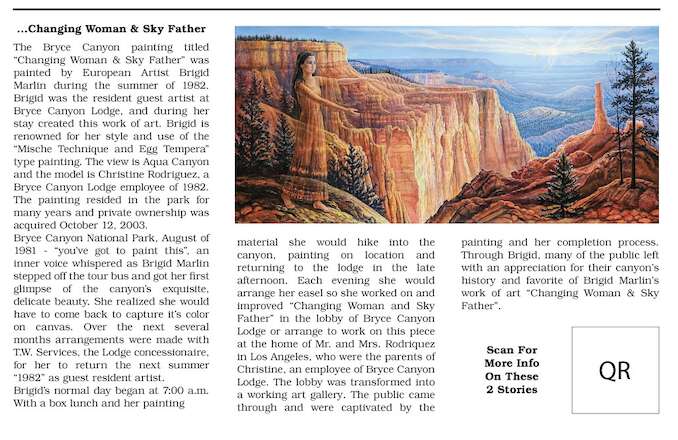
"Changing Woman & Sky Father"
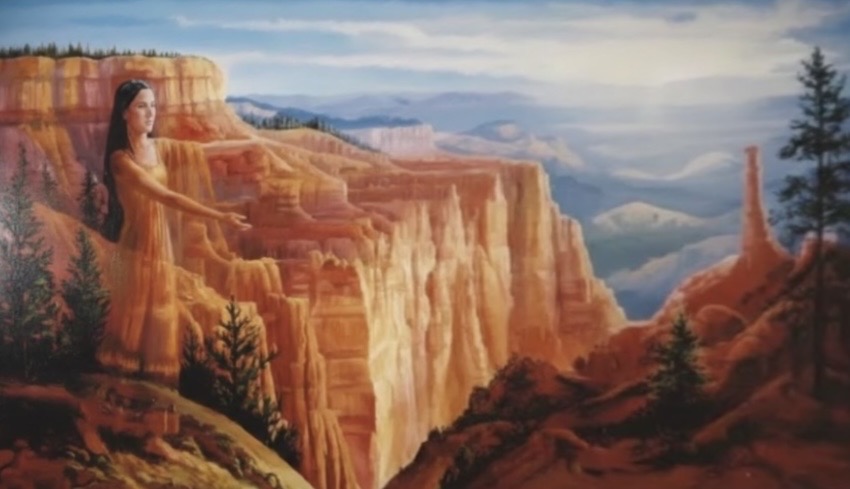
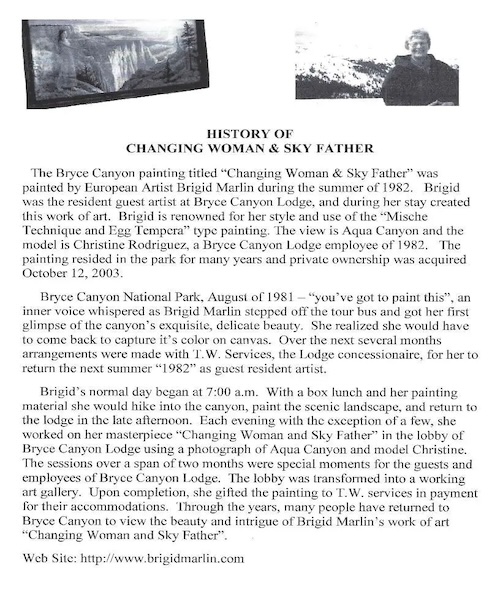
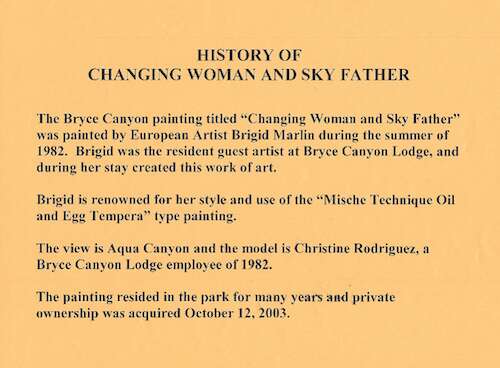
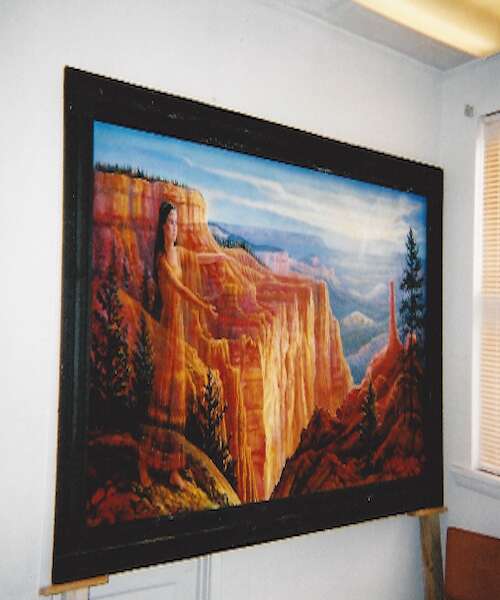
In 1981, artist Brigid Marlin felt a spiritual calling to capture the "exquisite, delicate beauty" of Bryce Canyon. Returning a year later as a resident artist, she created a masterpiece that became a part of the canyon's own history—painted in the very lobby of the Bryce Canyon Lodge where guests watched it come to life.
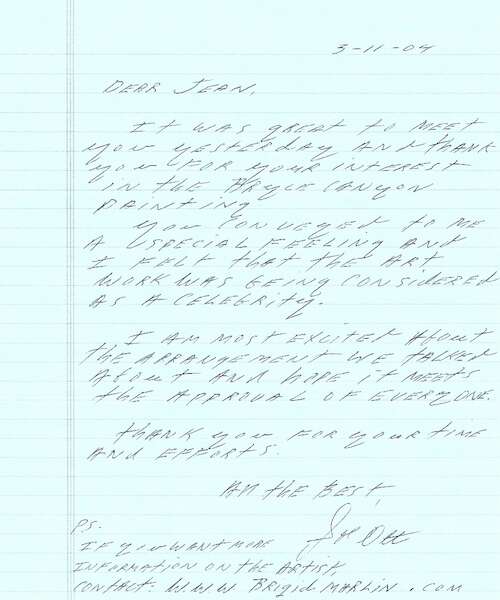
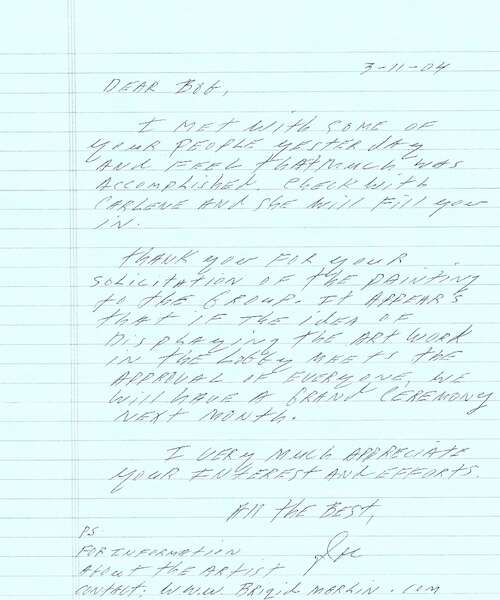
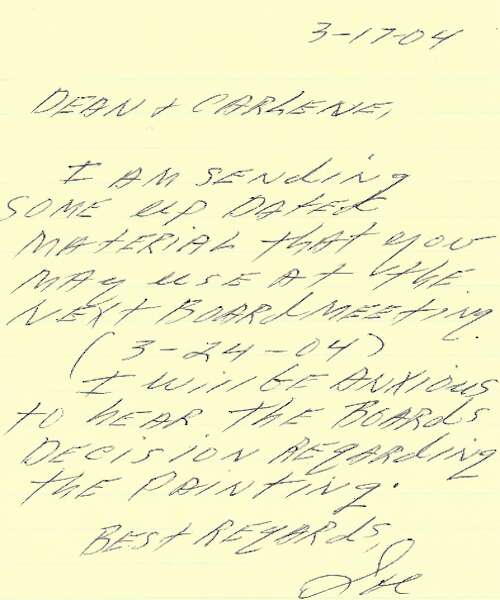
Decades later, in 2004, the painting’s journey continued. Joe Ott, working to share the beauty of this work through high-quality printings, noted that the artwork was being treated like a "celebrity" by those who saw it. His letters reveal a community effort to bring the "Changing Woman" back to a place of honor, proposing a "grand ceremony" to display the work once again in a public lobby for all to enjoy. This collection represents not just a landscape, but a decades-long connection between an artist, a national treasure, and the people moved by its spirit

THE ANTIMONY BEAR STORY
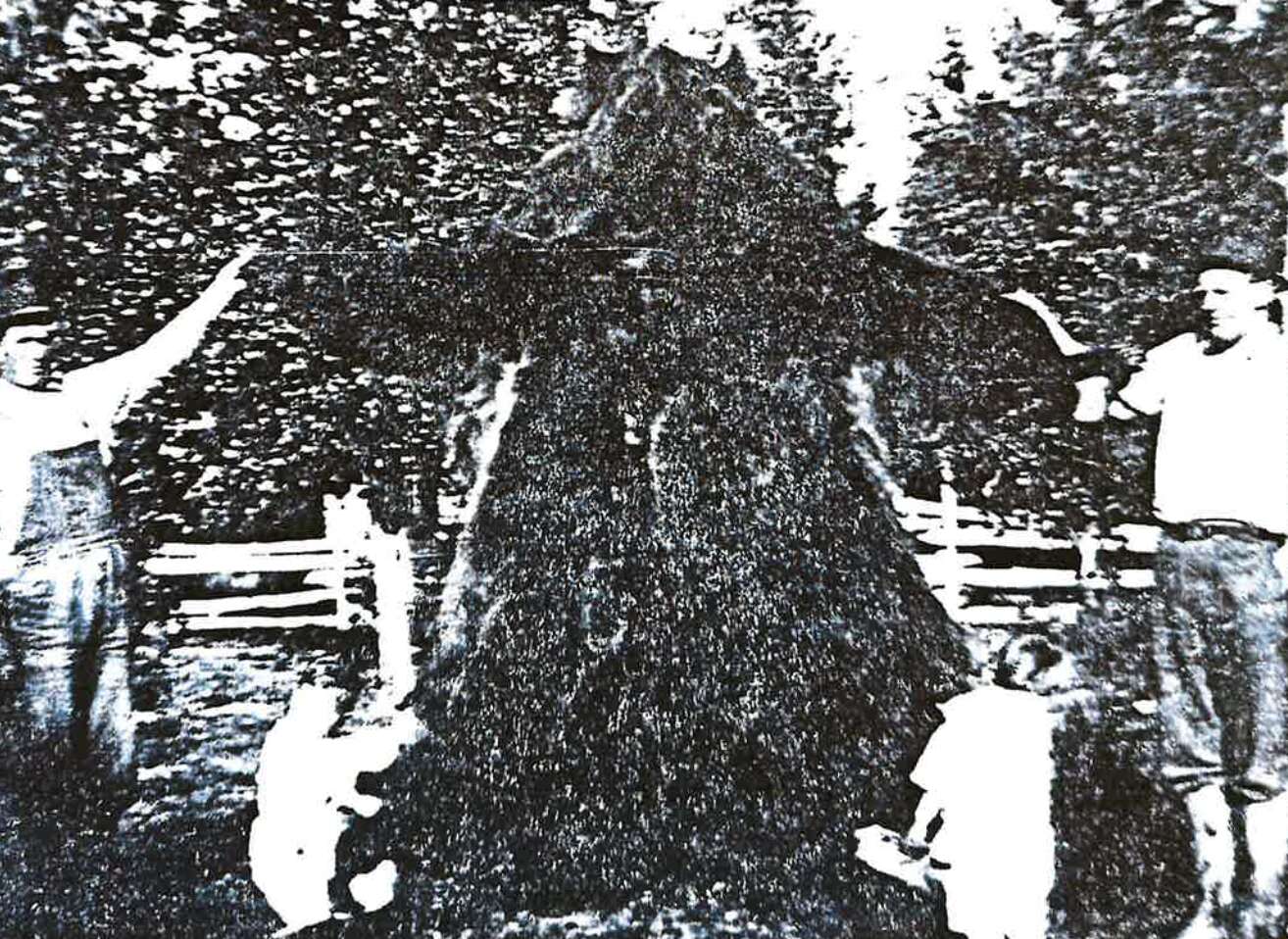
The Legend of the Antimony Bear
Long before Bryce Canyon was a household name, a massive grizzly known as "Clubfoot" ruled the rugged plateaus of Southern Utah. For over a decade, this elusive predator was the "cowman’s worst enemy," famous for his incredible size and his ability to evade every hunter who tracked him.
The Legendary Hunt On March 16, 1916—the same year Ruby’s Inn was founded—local ranchers Chess and Clell Riddle, along with "Rube" Jolley, finally cornered the old grizzly near Antimony. After a grueling pursuit through steep canyons and rocky ridges, the men finally brought the legend down.
A Lasting Legacy The bear was so enormous that its hide reportedly covered a large horse from head to tail. The skull was eventually sent to the Smithsonian Institute, where experts estimated the bear was between 50 and 60 years old. Today, the "Antimony Bear" remains one of the greatest pieces of folklore in the region—a symbol of the untamed wilderness our founders encountered over a century ago
The Legend Told 3 Ways
The Community Perspective
In 1985, a local resident named Melba Larsen sat down to weave together a tapestry of her town’s history. She gathered faded newspaper clippings, dusty forest records, and the hushed whispers of family memories to reconstruct a decade that had been defined by a single shadow: the reign of a legendary bear.
The Ranger’s Memoir
Retired forest supervisor J. W. Humphrey provides a fascinating firsthand account of the 1916 killing of a mammoth grizzly bear near Antimony, Utah
Face-to-Face with the Bear
In 1963, retired Forest Ranger Ambrose Shurtz took up his pen to record a more personal, harrowing side of the legend. His memoir is a raw, first-hand journey into the high-mountain camps where the grizzly was more than just a headline—it was a breathing terror. Shurtz reconstructs the silent, heart-stopping moments of the 1906 encounter, when a midnight predator didn't just haunt the woods, but stepped directly into his camp to collapse his tent and stand inches from his face
In addition to the personal narrative, this PDF includes the official 1963 correspondence from the United States Department of the Interior. This letter serves as the scientific verification of the legend, providing a formal look at the bear's remains held by the Smithsonian Institution.