Bryce Canyon has a way of rearranging what you thought you knew about the American Southwest. Here are seven facts that catch even repeat visitors off guard — and why the basecamp for all of them has been sitting a mile from the entrance since 1916.
1. Bryce Canyon Isn’t Actually a Canyon
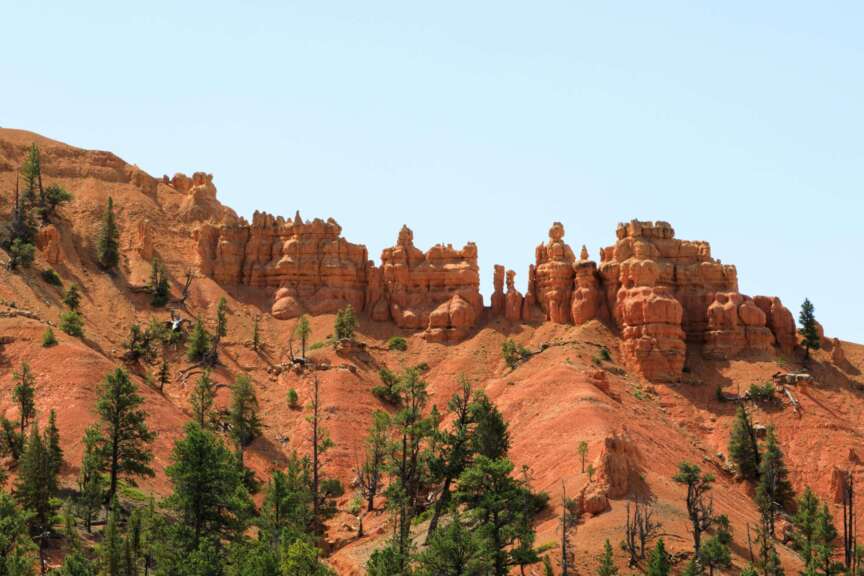
A true canyon is cut by a river running through it — think the Colorado River carving the Grand Canyon. Bryce doesn’t have one. What you’re standing in front of is technically a series of natural amphitheaters carved into the edge of the Paunsaugunt Plateau, shaped over millions of years by rain, ice, and frost wedging into the rock rather than a river cutting through it. “Canyon” stuck as a name; geologically, it’s something rarer.
2. It Holds the Largest Concentration of Hoodoos on Earth
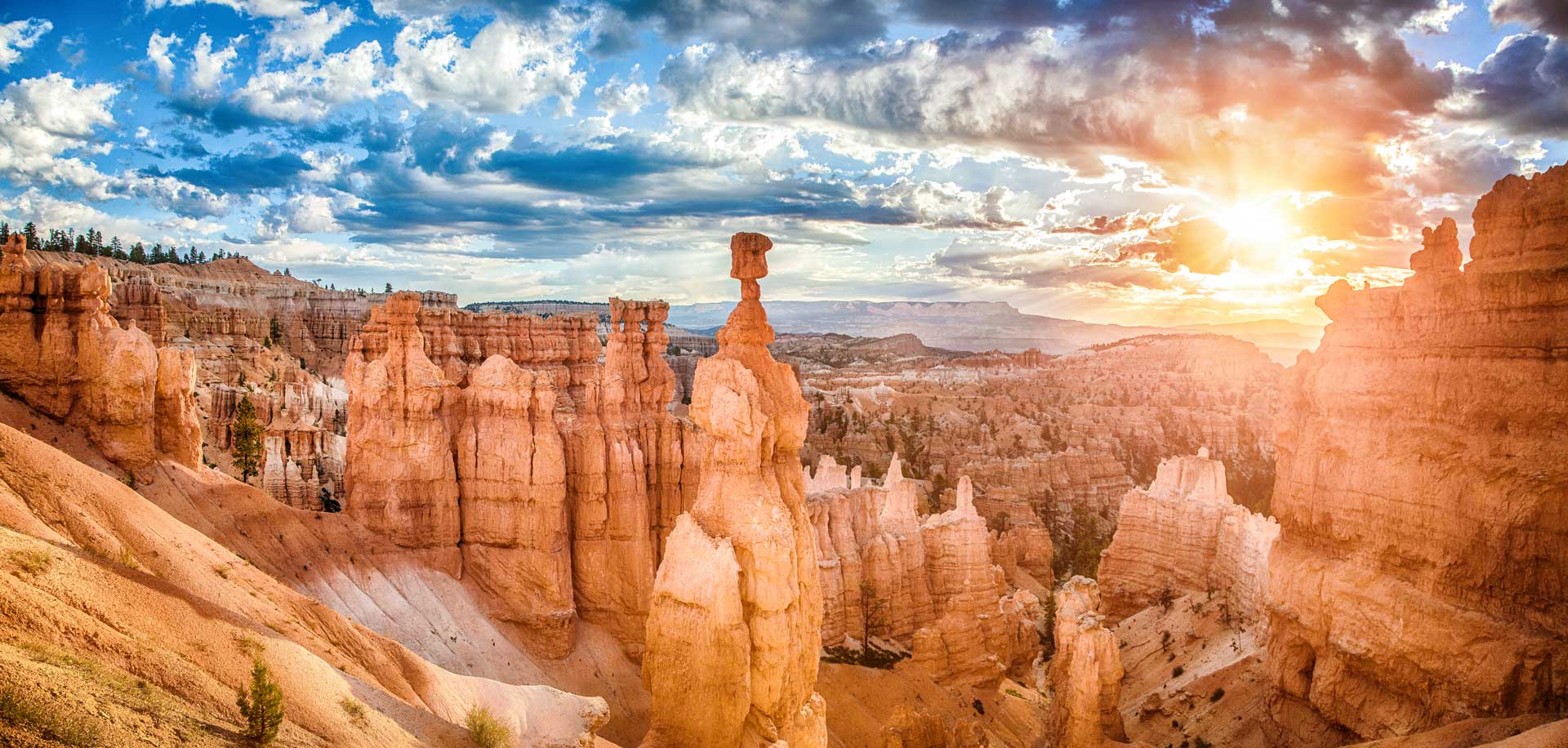
Hoodoos — those tall, narrow spires of rock — exist on every continent, but nowhere else on the planet are they packed together as densely as they are here. They’re the product of a freeze-thaw cycle unique to this elevation: water seeps into cracks by day and freezes at night, and as the ice expands it slowly splits the rock into fins, windows, and eventually the freestanding spires that give Bryce its skyline.
3. The Elevation Will Catch You Off Guard
Most people picture Utah’s red rock country as low desert. Bryce flips that: the rim sits between 8,000 and 9,100 feet, with Rainbow Point marking the park’s highest overlook. That altitude keeps summer temperatures noticeably milder here than at nearby Zion — but it also means thinner air on the hike back up from the amphitheater floor, so extra water and a slower pace are worth planning for.
4. You Can See Up to 7,500 Stars on a Clear Night
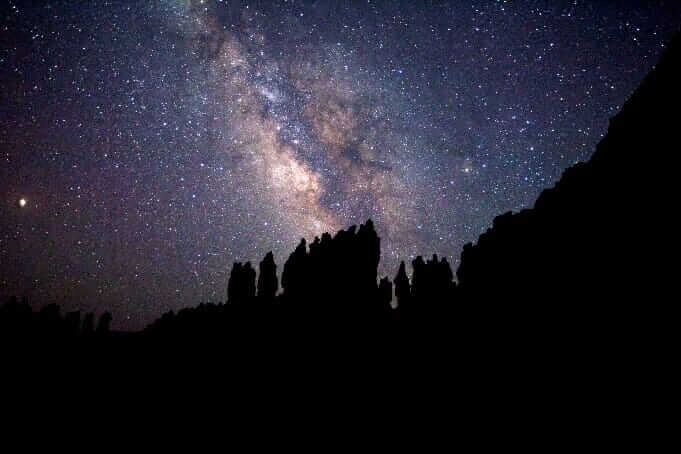
Bryce Canyon earned Gold Tier International Dark Sky Park certification in 2019 — the highest rating given, reserved for places with almost no light pollution. On a clear, moonless night here you can pick out as many as 7,500 stars with the naked eye, compared to a few hundred from a typical suburban backyard, with the Milky Way stretching horizon to horizon.
5. Winter Turns It Into an Entirely Different Park
Snow-capped hoodoos against red rock is a color contrast summer visitors never see. Smaller crowds, crisp high-mountain air, and activities like cross-country skiing, snowshoeing, and sleigh rides right outside the door make winter one of the most underrated times to experience Bryce — which is exactly why Ruby’s Inn builds its annual Winter Festival around it.
6. It’s Named After a Rancher
The park takes its name from Ebenezer Bryce, a Scottish-born Mormon pioneer who settled near the amphitheaters in the 1870s to raise cattle. By long-standing local legend, the only line attributed to him about the landscape is a practical one: he’s said to have called the maze of spires “a hell of a place to lose a cow.” Just a few decades later, a different kind of settler — Reuben “Ruby” Syrett — looked at the same canyon and built a lodge to share it with the world.
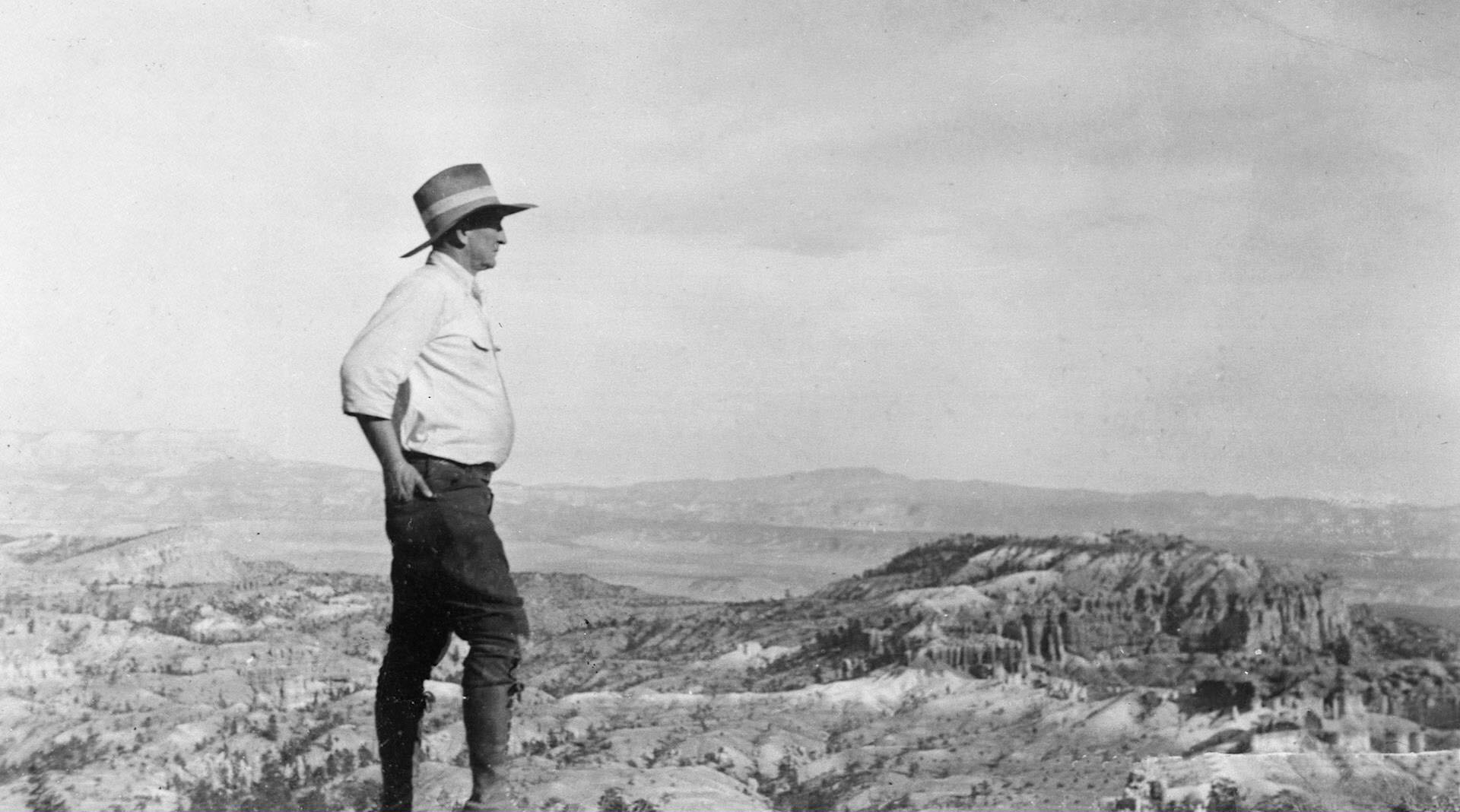
7. Ruby’s Inn Predates the National Park Itself
Ruby’s Inn was welcoming guests before Bryce Canyon had any federal protection at all. In 1916, Reuben “Ruby” Syrett brought his family to settle the area, and by 1919 had built a small lodge near the rim called “Tourist Rest” — a name that lives on today as the coffee shop on the property. When Bryce Canyon was declared a National Monument in 1923, Ruby moved the lodge to his ranch and renamed it Ruby’s Inn — five years before Bryce became a National Park in 1928. It’s been family-run ever since, and that one small lodge has grown into a lot more than a place to sleep.
Why Ruby’s Inn Is the Basecamp for All of It
That single lodge Ruby called Tourist Rest has grown into a full complex at the park’s front door — still run by the same family, over a century later.
Lodging for every kind of traveler. Three hotel properties — Ruby’s Inn, The Grand, and Bryce View Lodge — plus a full RV park and campground with rustic cabins and tipis mean the same group can split across budgets and styles and still gather for dinner.
Tourist Rest Coffee. The same name Ruby gave his first lodge now lives on as the on-site coffee shop — espresso and pastries where he once served travelers a hot meal.
Restaurants for every part of the day. The historic Cowboy’s Buffet & Steak Room and the Canyon Diner cover breakfast through dinner, and Ebenezer’s Barn & Grill closes out the evening with a western dinner buffet and live show.
Local outfitters, right outside your door. Guided horseback rides along the rim, ATV and off-road tours into the backcountry, and e-bike rentals on the paved Canyon 2 Canyon trail mean the adventure doesn’t stop when the park closes for the day.
Unmatched location, zero park-traffic stress. Guests can catch the official Bryce Canyon Shuttle directly from the property and skip the parking scramble during peak season entirely.
Everything else, handled. A complimentary hot breakfast buffet, a fully stocked General Store for gear and souvenirs, and a heated indoor pool, jacuzzi, and 24-hour laundromat round it out.
Over a century after Ruby Syrett first built a lodge to share his view of the canyon, Ruby’s Inn is still the closest basecamp to it — closer together, closer to Bryce.
Ready to see it yourself? Book your stay at Ruby’s Inn.
FAQ
Is Bryce Canyon actually a canyon? No — it’s a series of natural amphitheaters carved into the Paunsaugunt Plateau by rain, ice, and frost rather than a river.
How high is Bryce Canyon? The rim ranges from about 8,000 feet to 9,100 feet at Rainbow Point, the park’s highest overlook.
Can you see stars at Bryce Canyon? Yes — Bryce is a Gold Tier International Dark Sky Park, and visitors can see as many as 7,500 stars on a clear, moonless night.
How old is Ruby’s Inn? Ruby’s Inn traces back to 1916, when Reuben “Ruby” Syrett settled the area and built an early lodge — five years before Bryce Canyon became a National Monument and twelve years before it became a National Park.
Is Bryce Canyon open in the winter? Yes! Bryce Canyon is open year-round, with the lowest crowds of any season, it’s a peaceful time to enjoy cross-country skiing, iceskating, snowshoeing, or winter hiking under crystal-clear dark skies. Keep in mind that high elevations (8,000 to 9,000+ feet) mean below-freezing temperatures and occasional temporary road or trail closures after heavy snowfall, so warm layers and checking park conditions before you arrive are essential.